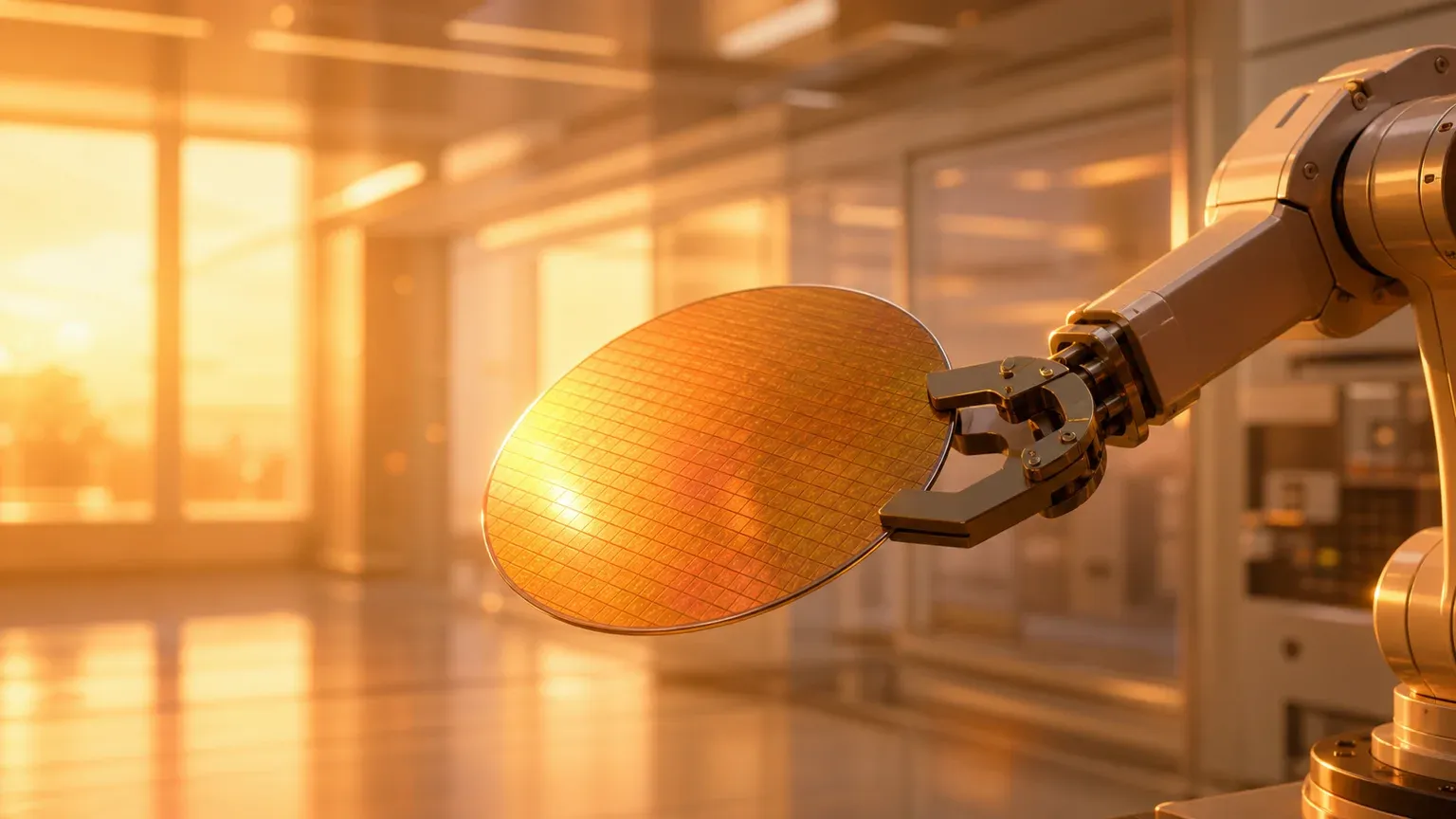
A big AI company’s deepest worry is often not having enough chips, rather than not having a strong enough model. SpaceX’s answer is very “Musk”: make them yourself. The plan is called TeraFab.
This piece covers how far it has come, why SpaceX is doing it, who it’s measured against, and where the risks are. To get to know SpaceX and its AI businesses first, see What kind of company is SpaceX.
How far TeraFab has come
In March 2026, Musk announced TeraFab, pushed by Tesla, SpaceX, and xAI, to build their own chip fab and make AI chips. The stated goal was terawatt-scale AI compute per year (1 TW). That’s where the “tera” in the name comes from.
| Date | Progress | Source |
|---|---|---|
| March 2026 | Musk announces TeraFab | Media reports |
| April 2026 | Intel joins | According to Reuters |
| August 6, 2026 | Site set in Grimes County, Texas; first-phase investment of more than $16.8 billion, creating 3,000 jobs | Texas Governor’s Office (official) |
| October 2026 | Musk confirms talks with TSMC, but stresses SpaceX will build and run the fab itself, with TSMC at most leasing part of the site; Intel’s CEO reaffirms Intel will stay involved and supply its 14A process | According to Tom’s Hardware |
As of October 2026, TeraFab has a site and a first-phase budget, but it is not yet in mass production. Its capacity and production timeline have not been made public.
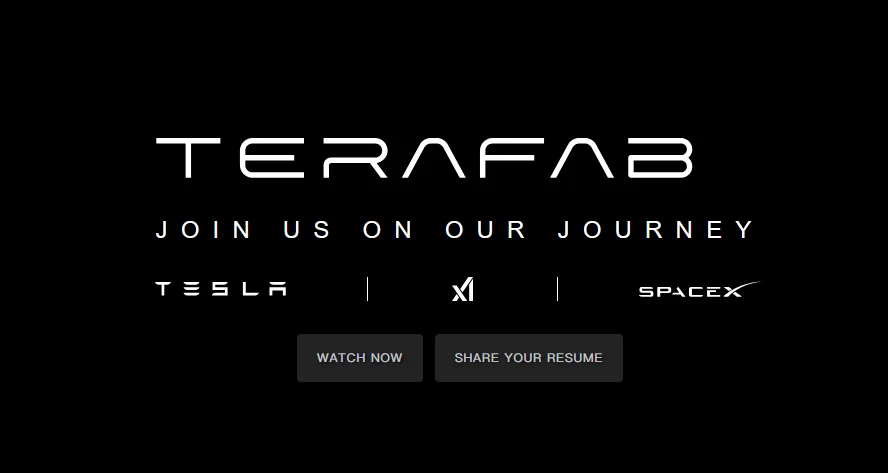
Figure: TeraFab’s public recruiting page, with the Tesla, xAI, and SpaceX logos lined up below, matching its “built by three companies” positioning.
Why make its own chips
SpaceX’s AI unit (SpaceXAI) relies on NVIDIA’s advanced GPUs to train Grok, and it also rents compute to outside customers, including Anthropic and Google. According to its August 2026 quarterly report (10-Q), renting out compute is the main driver of the AI unit’s revenue growth. How many chips it can buy sets how big this business can get.
The problem is that advanced GPUs have long been in short supply and are affected by US export controls. In theory, making its own chips gets SpaceX three things: less reliance on a single supplier, lower costs over time, and control over supply timing. For the export-control risk, see SpaceXAI’s regulatory risk map.
The benchmark: vertically integrated compute empires
Google has its own TPU, Amazon has Trainium, and Meta is also investing in its own chips. The logic is the same: once AI gets big enough, the cost and risk of buying chips get high enough to be worth making them yourself.
TeraFab goes one step further: not just designing chips, but building its own fab to make them. If it works, SpaceX moves from “buying chips to use” to “making its own chips,” which improves its costs and bargaining power. To see the whole compute supply chain, read The AI hardware supply chain, end to end.
The risk: even the S-1 says it may not succeed
Chipmaking is famously hard to break into: it takes huge amounts of capital, process know-how can’t be rushed, and yields and timelines are full of uncertainty. SpaceX can build rockets, but it has no track record in wafer manufacturing.
The clearest warning comes from SpaceX itself. In the risk factors of its pre-IPO S-1, it states plainly that this in-house chip plan “may not be successful.” As of October 2026, whether and how TSMC will take part is also still unsettled.
Penchan’s summary
TeraFab has moved from a statement to a plan with a site and a first-phase budget, but it is still far from mass production, and even SpaceX admits it may fail.
The most practical view: treat it as a watch point. The next things to watch are the production timeline and the real roles of Intel and TSMC. If it works, SpaceX takes control of its own compute supply; if it stalls, that’s no surprise either.