What Grok 4.6 is: a model built for long-running agent work
Grok 4.6 comes from SpaceXAI. The corporate background is worth a sentence, because it has changed a lot recently: Grok started at Elon Musk’s AI company xAI; in February 2026 SpaceX absorbed xAI outright, on 12 June SpaceX listed publicly under the ticker SPCX (see our SpaceX company deep dive), and on 6 July xAI was formally renamed SpaceXAI.
The official one-line positioning: building on the previous generation with particular focus on “long-running agents” and “more ambitious interactive and visual work”. Both phrases in plain language:
- Agent: letting the AI use tools across many steps on its own to finish a job. Reading your codebase, editing several files, running tests, and fixing its own failures, without you directing each step.
- Interactive and visual work: not just a block of text, but something you can click through and look at with the layout already done: a small site, a dashboard, a properly formatted document.
In other words, the target moves from “is the answer correct” toward “can it finish the job by itself”. That positioning drives both its strengths and its weaknesses, and everything below follows from it.
The official launch video makes the pitch more clearly than the text does, in 46 seconds:
Video: the official SpaceXAI launch video (source: x.ai/news/grok-4-6, compressed for faster loading)
The specifications fit in one table.
| Specification | Detail |
|---|---|
| Context window | 500,000 tokens (unchanged from the previous generation) |
| Inputs and outputs | Text and images in, text only out, with no output length cap |
| Reasoning effort settings | Low, medium, high (default) and extra high |
| Model ID | grok-4.6 |
| Released | 12 August 2026 |
(Sources: SpaceXAI developer docs and the official release notes. A token is the unit models use to split and price text; how many a given passage consumes varies by content.)
What Grok 4.6 is good at: moving from answering to finishing
The whole official narrative for this generation is about the model lasting longer.
This is more than a slogan, and the published numbers lean the same way. Laying out the generation-over-generation gains, the three biggest all come from tests that require many consecutive steps:

The practical way to read that chart: if you only ask it questions and write short pieces, you will barely notice this generation; the gains show up when you hand over one job and let it finish.
The official training notes line up. This generation had a longer supplemental training run, and used 4.5, the older model, to regenerate the demonstration data used for training, with problematic traces filtered out automatically. The reinforcement learning stage was fed a large set of agent environments, including kernel optimisation, web development and computer-aided design. In short: the previous generation was used as a teacher, specifically to train this one to finish long tasks.
One more interesting observation from the announcement: on longer tasks they began to see the model verify its own work before moving on, checking each step before continuing. That is the most expensive and most failure-prone part of agent work, so a model that converges on its own saves more than time.
The practical pitch splits three ways.
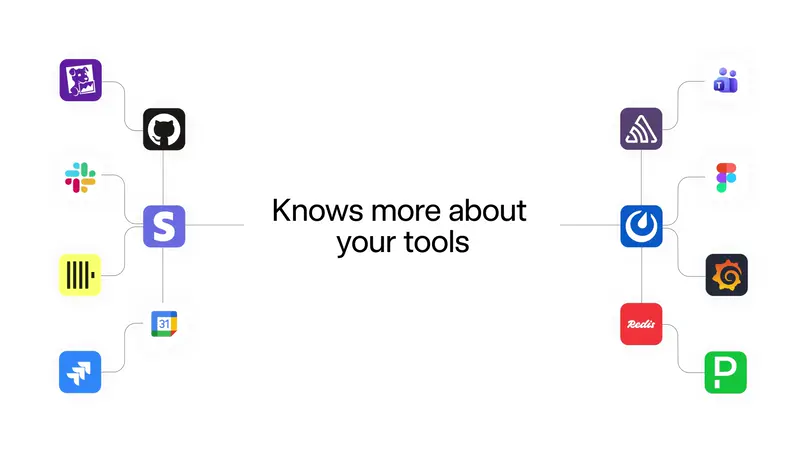
First: a better grasp of your tools and how your team works.
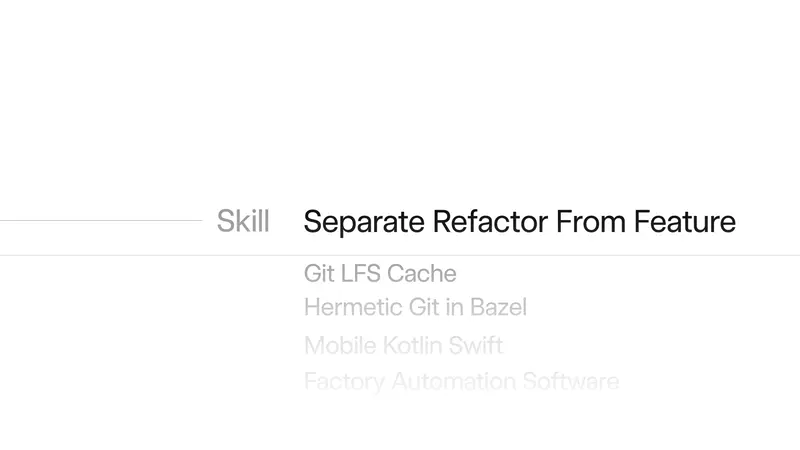
Second: handling specific, fiddly engineering work that carries domain context. The official video lists skill names as examples, all of them the kind of detail work that rewards experience:
Third: output that looks closer to a finished product. The official claim is that given a concrete product idea, it can establish an application’s structure and visual language in one pass, without several rounds of adjustment. Here is the example from the video:
Worth flagging on this one: these are hand-picked demonstration frames, not a random sample. They prove the model can reach that level, not that you will get it every time.
The scorecard: the vendor’s own table is the honest one
Start with the independent figure. On the Artificial Analysis Intelligence Index, a composite of nine evaluations, Grok 4.6 scores 61, ranking sixth out of 183 models on the board.
Two things about that number. First, it confirms the official claim: the announcement says it matches GPT-5.6 Sol on this index, and independently it is indeed 61 to 61. Second, putting four models on one chart shows the real story, which is that they are bunched together:

One point between first and third. For an ordinary user that gap is essentially imperceptible; what actually affects you is price, speed, and whether it is available in the interface you use.
Now the vendor’s own version, which is considerably more honest than the announcement text. SpaceXAI published a ten-row comparison table and, as is conventional, set the best score in each row in bold. Counting the bold entries:

In a set of benchmarks the vendor selected itself, it wins three out of ten. That is worth remembering: vendor announcements usually pick favourable tests, and even so, the leader here is a competitor.
The full numbers, for anyone who wants them:
| Evaluation | Grok 4.6 | Grok 4.5 | GPT-5.6 Sol | Claude Fable 5 |
|---|---|---|---|---|
| Intelligence Index (AA) | 61 | 56 | 61 | 62 |
| Real-world work output (GDPVal-AA v2) | 1753 | 1526 | 1728 | 1741 |
| Editor tasks (CursorBench v3.2) | 69.9% | 66.7% | 67.2% | 70.5% |
| Long bug-fixing tasks (DeepSWE v1.1) | 65.9% | 54% | 73% | 70% |
| Frontier coding (FrontierCode v1.1) | 61.3% | 56.6% | 60.6% | 63.6% |
| Agent tasks (APEX-Agents) | 57.5% | 47.1% | 56.7% | 59.2% |
| Long terminal tasks (Terminal-Bench v3.0) | 26% | 15.7% | 34.6% | 34.1% |
| Software engineering (APEX-SWE) | 56.4% | 53.6% | Not listed | 58.8% |
| Knowledge work (AA-Briefcase) | 1577 | 1313 | 1502 | 1574 |
| Long-form legal (Harvey LAB) | 15.8% | 12.9% | 2.5% | 11.3% |
(Bold marks the best score in each row. Source: the official SpaceXAI announcement. Their note: competitor scores are the best of self-reported or publicly available results. GDPVal-AA and AA-Briefcase are Elo scores, where higher is better, on a different scale from the percentages.)
Two patterns stand out. Grok 4.6’s three wins, real-world work output, knowledge work and long-form legal, all lean toward documents and knowledge work. Its worst loss, long terminal tasks, is the purest form of “operating a computer continuously for a long time”. That sits in some tension with the long-running-agent narrative: the gains there are genuinely the largest, but improving fastest and catching up are different things. It went from 15.7% to 26% while the competition sits around 34%.
Where it falls short: two blanks you have to fill in yourself
Beyond the gaps on the scoreboard, two things are absent from the record rather than bad news in it. That distinction matters, and I will not spin it either way.
First, a second consecutive generation with no safety report. The announcement carries a Safety and capabilities section running to three sentences: safeguards have been calibrated to capability, the safety stack is designed not to block legitimate use, and the pre-deployment testing was their widest yet. None of the three contains a figure, and no model card is linked. Grok 4.5 shipped without one too. Set against Anthropic and OpenAI publishing full safety reports on launch day, that is a real gap.
Second, no independent hallucination figure. Hallucination is jargon for stating something wrong with complete confidence. It was a genuine problem last generation: Grok 4.5 scored 54% on independent testing, more than double the generation before it. The equivalent number for 4.6 was not available at the time of this fact check, and the Artificial Analysis field for it still reads no data.
Also missing: Chinese-language scores, measured output speed and latency figures. Of the independent evaluations, only the intelligence index and pricing are complete. Which means any claim that Grok 4.6 has improved on hallucination, or got better at Chinese, has no evidence behind it until independent numbers exist. The quickest way to check current status is the Artificial Analysis page.
One smaller observation: Cursor’s blog post was co-published with SpaceXAI and is near word-for-word identical. When the previous generation launched, Cursor also published its own benchmark table, including a footnote honestly acknowledging that a stale snapshot of Cursor’s own code had leaked into training data. There is no equivalent this time, which removes one cross-check.
Pricing: cheap headline rate, with one line that is easy to miss
For a frontier-class model the headline rate sits at the cheap end, and it is unchanged from the previous generation.
| Item | Grok 4.5 | Grok 4.6 |
|---|---|---|
| Input | $2 | $2 |
| Output | $6 | $6 |
| Cached input | $0.30 | $0.50 |
| Above 200,000 tokens (input / cached / output) | $4 / $0.60 / $12 | $4 / $1 / $12 |
(US dollars per million tokens. Sources: the Grok 4.6 docs and the Grok 4.5 docs.)
The only line that rose across generations is cached input, from 30 to 50 cents, an increase of roughly two thirds. Cached input is the discounted rate for re-reading the same content, such as your codebase or a system prompt that has to be read again on every call. For ordinary users this line is invisible, but for anyone actually running agent tasks it is the heaviest-used one: run the AI for twenty consecutive steps and the context from the previous nineteen is re-read at every step.
Put another way, the increase lands on exactly the workload this generation is built for. It is a detail worth costing out in advance rather than something that undermines the model’s cheap positioning.
Two more points carry over from the previous generation: a single request that reaches 200,000 tokens is billed at double for the entire request, with the earlier portion repriced too; and the announcement mentions a faster variant at double the price.
Where you can use Grok 4.6
The launch channels are:
| Channel | Notes |
|---|---|
| Cursor | Code editor, co-launched with SpaceXAI |
| Grok Build | SpaceXAI’s own developer interface |
| SpaceXAI API | Usage-based developer interface, model ID grok-4.6 |
| OpenRouter / Vercel / Cloudflare | Third-party platform access |
The announcement did not set out a timeline for grok.com, X or the Grok mobile app, so the launch emphasis for this generation clearly sits with developers. Consumer availability will change over time, so to confirm which version your account currently gets, check the official SpaceXAI announcement and the in-app notes.
Grok 4.6 versus GPT-5.6 and Claude
Condensing the evidence above into one table:
| Your situation | Recommendation |
|---|---|
| Editing code across files, at volume | Grok 4.6 is cost-effective, with a headline rate at the cheap end |
| Handing over one job to finish alone | Its home ground, though long terminal tasks still trail by about 8 percentage points |
| Documents, reports, knowledge work | Its strongest area; all three of its firsts sit here |
| Writing quality and interface taste | Claude remains the community’s quality gatekeeper |
| High-stakes or published content | Prefer Claude or GPT. Two generations without a public safety report, and no fresh hallucination figures |
For GPT-5.6, see ChatGPT 5.6 explained. For a broader head-to-head, see Claude vs ChatGPT.
The one-line version: give it the grunt work you want finished without supervision, keep quality and safety-sensitive work with Claude or GPT, and let your budget set the ratio.
In summary: what it sells is the ability to finish
Grok 4.6 is internally consistent: capability pushed toward long tasks, a launch aimed at developer channels first, and a price increase landing on the line agent work uses most. It knows who it is talking to.
Judging whether it is worth it turns less on benchmark scores than on how you work. If you mostly ask questions and write short pieces, this generation offers you very little; if you hand over whole jobs and let the model finish them, the largest gains land exactly there.
And do not forget the two blanks. Two generations without a safety report, and still no independent hallucination figure. Those fields are empty rather than bad, so verifying anything important yourself remains the practical safeguard for now.