
If you had to pick one product to explain why Anthropic grew so fast, the answer is very likely Claude Code. This AI coding tool launched in 2025. By February 2026, the company said its annualized revenue was above $2.5 billion.
This piece doesn’t teach setup or commands. It looks only at the business: the revenue curve, why it broke into enterprises, and which rivals it faces. To get to know the company first, start with What kind of company is Anthropic.
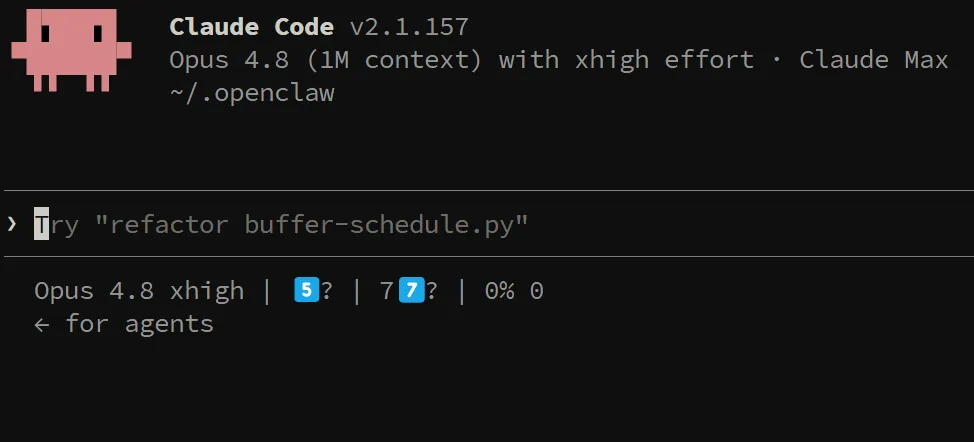
How steep is the revenue curve
In February 2026, Anthropic said in its Series G announcement that Claude Code’s annualized revenue (ARR) was above $2.5 billion. For the company as a whole, Anthropic’s total annualized revenue was above $47 billion as of May 2026.
ARR turns recent revenue into a one-year estimate. It shows how fast a business is growing, not what it actually took in over a full year. Even after that discount, Claude Code is clearly a product many companies really pay for, not a demo that gets praise but no sales.
Why Claude Code
First, the most valuable use case. Coding is one of the AI uses whose results are easiest to measure. Engineering hours saved and faster development can both be turned into cost figures, so the buying decision is easy.
Second, it plays to the model’s strengths. Claude has long had a strong reputation for reading long documents and writing code. Claude Code lets the model understand a whole codebase, use tools in sequence, and finish multi-step tasks on its own. This is what people call a coding agent. For how the model line divides the work, see The Claude model family and Constitutional AI.
Third, the timing was right. Companies were rushing to find a concrete answer to “what can AI actually do for us.” Claude Code gave them something they could use right away, with results they could see.
Bottom-up into enterprises
Claude Code first won over individual engineers. Once they liked using it, they brought it into their teams and companies. This bottom-up spread is usually faster than traditional enterprise sales: when frontline engineers can’t work without a tool, it is hard for the purchasing team to say no.
In February 2026, the company said enterprise customers already brought in more than half of Claude Code’s revenue. That makes Anthropic’s “enterprise first” strategy more convincing. For how this business logic connects to valuation, see Anthropic’s valuation and IPO.
Competition: coding is the most crowded battleground
- GitHub Copilot: tied to GitHub’s developer ecosystem, so it starts with a huge user base.
- Cursor: a popular AI code editor. SpaceX acquired it in August 2026, paying entirely in stock at an implied value of about $60 billion. It is now a SpaceX subsidiary.
- Codex: OpenAI’s coding tool, competing head-on with Claude Code.

They are all fighting for the same developers and enterprise budgets. Claude Code’s lead is not permanent. It has to keep its models, agent experience, and enterprise integration better than everyone else’s.
Penchan’s summary
Claude Code is Anthropic’s best example of turning model ability into steady enterprise revenue, and its strongest card when competing with OpenAI. To understand why Anthropic’s private valuation reached about $965 billion in May 2026, you can’t skip Claude Code.
Its lesson for every AI company: however strong the model, you need a concrete use case that companies will pay for right away. Anthropic focused its firepower on coding and produced a steep revenue curve. Whether it can hold that position depends on keeping its product lead while squeezed by Copilot, Cursor, and Codex.
Further reading: What kind of company is Anthropic, Anthropic vs OpenAI, Anthropic’s valuation and IPO.