To understand where a company is taking its AI, first look at who is steering. On August 5, 2026, Google reshuffled its AI leadership, and the division of roles is no longer what it was. If you’d like to get to know the company as a whole first, start with what kind of company Google is.
After the reshuffle there are roughly four roles. Sundar Pichai runs the whole company. Koray Kavukcuoglu leads day-to-day work on Gemini. Nobel laureate Demis Hassabis became chairman of Google DeepMind and chief scientist of Alphabet. And the two founders, Larry Page and Sergey Brin, hold a majority of the voting power through a special class of stock.
Demis Hassabis: Nobel Laureate, Now Chairman
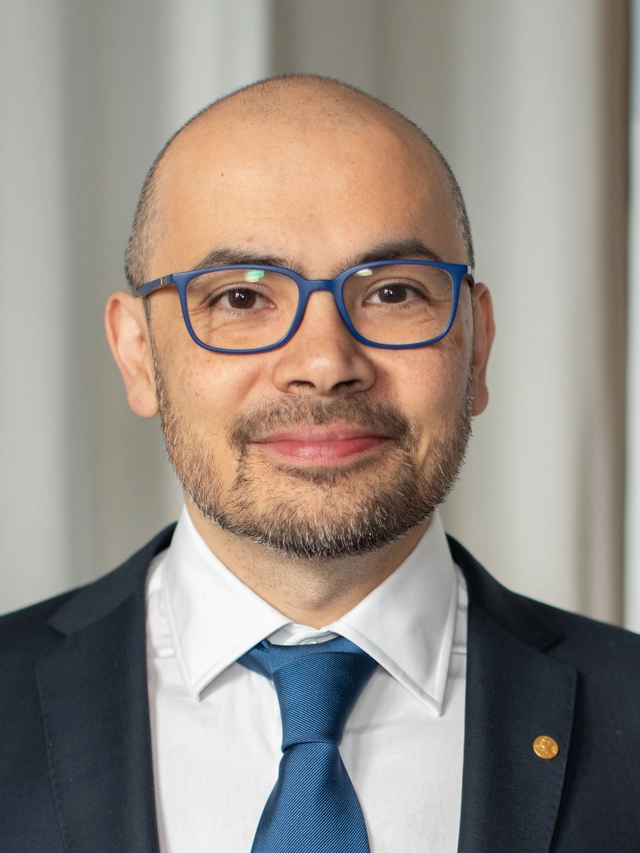
Hassabis was a chess prodigy as a teenager and later studied neuroscience. He co-founded DeepMind in London in 2010 and sold it to Google in 2014. DeepMind built AlphaGo and AlphaFold. AlphaFold’s work on predicting protein structures earned him and his colleague John Jumper the 2024 Nobel Prize in Chemistry.
In 2023, Google merged DeepMind and Google Brain into Google DeepMind, with him as CEO. After the August 2026 reshuffle, he became chairman of Google DeepMind and chief scientist of Alphabet, and he remains CEO of the AI drug-discovery company Isomorphic Labs. Day-to-day work on Gemini now falls to Kavukcuoglu.
Koray Kavukcuoglu and the Technical Team: A 2026 Shake-Up
Kavukcuoglu was DeepMind’s CTO. After the reshuffle he became a senior vice president and chief AI architect at Google DeepMind, reporting directly to Pichai. He is responsible for Gemini model development, frontier research, and the Gemini app and developer teams.
In the same year, several key people behind Gemini left:
| Person | Former role | Where they went in 2026 |
|---|---|---|
| Jeff Dean | Google chief scientist | Announced in August that he is founding an independent public benefit corporation with Sanjay Ghemawat; Google is a founding investor |
| Oriol Vinyals | Gemini co-technical lead | According to Reuters, joined Dean’s startup, Discovery Loop |
| Noam Shazeer | Co-inventor of the Transformer architecture, Gemini co-technical lead | Reportedly joined OpenAI in June |
| John Jumper | Shared the Nobel Prize with Hassabis | According to Reuters, set to join Anthropic |
Top AI talent is a very small group. Wherever they go, that company gains an edge.
Sundar Pichai: One Person Wearing Two Crowns
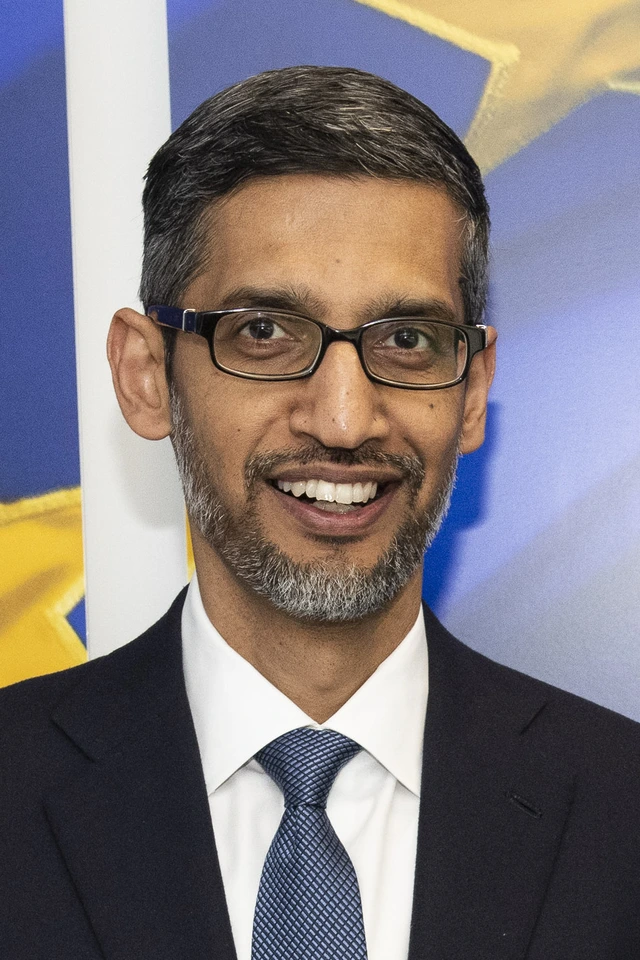
Pichai has been CEO of Google since 2015 and also CEO of parent company Alphabet since 2019. He oversees everything from Search, Android, and YouTube to the cloud, and he decides how AI capital spending is used. In July 2026, Alphabet raised its full-year capital spending forecast to $195–205 billion. He also announced the August AI reshuffle.
Critics once called him a “peacetime CEO”: good at keeping things steady, not fast enough. That criticism peaked in 2023, when Gemini got off to a rough start. He has two things to balance: spending heavily to race ahead in AI, while keeping Search, the cash cow, safe.
The Two Founders: Stepped Back but Still in Control
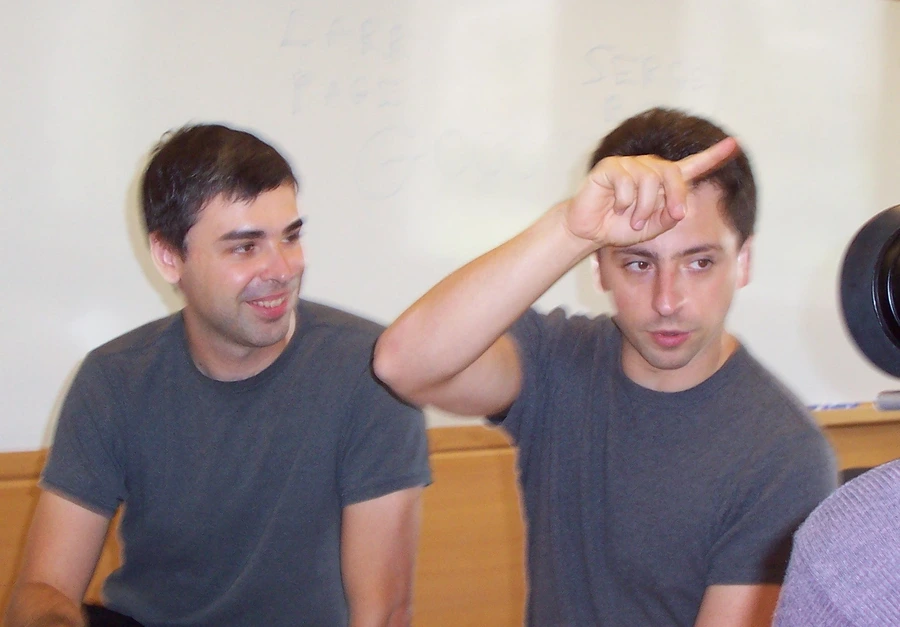
Page and Brin left daily operations long ago; Page handed over the CEO role in 2019. But Alphabet has three classes of stock. Class A, which anyone can buy, has one vote per share. Class B, held by the founders and not publicly traded, has ten votes per share. Class C has no votes. According to the 2026 proxy statement, the two control about 52.7% of the total voting power through Class B. As long as they agree, outside shareholders cannot overrule them. The board is chaired by John Hennessy, former president of Stanford University.
According to a Reuters report in August 2026, Brin has no executive title but informally influences model training, told staff at an April all-hands meeting to move faster, and also backed Kavukcuoglu. According to The Information, that same month he sent an internal memo admitting Gemini was behind Claude in AI coding. The full story is in even Google admits it’s behind Claude.
This setup lets the founders make long-term big bets without worrying about every quarter’s share price. The cost is concentrated power that outside shareholders find hard to check.
Penchan’s summary
The 2026 reshuffle made Google’s AI roles clearer: Pichai runs the company and the money, Kavukcuoglu is responsible for building Gemini, Hassabis moved to chairman and chief scientist, and the founders sit at the top holding the votes.
This structure can sustain heavy spending, but it also means a handful of people make the calls. A group of core researchers left in the same year, and that is the variable most worth watching after the reshuffle.