
AI giants rarely admit they’re behind, and a founder admitting it personally is rarer still. According to tech outlet The Information, Google co-founder Sergey Brin sent an internal memo to DeepMind engineers in April 2026. In it, he admitted that Gemini was trailing Anthropic’s Claude in agentic coding (letting AI write and revise code on its own), and told everyone to catch up urgently.
First, be clear about what this is: a leaked document relayed by the media, not an official Google statement. To get to know the whole company first, read What kind of company is Google.
What the memo said
The line multiple outlets quote is: “To win the final sprint, we must urgently close the gap on agentic execution and make our models the primary developer.”
According to reports, the memo also told Gemini engineers to switch to Google’s own agent tools for complex, multi-step tasks. The writer holds no formal management role, yet spoke directly to all of DeepMind. That candor is itself a signal.
The elite team: Google’s counterpunch
According to reports, Brin ordered an elite team (a strike team) inside DeepMind dedicated to catching up on coding. It is led by Sebastian Borgeaud, the researcher who previously led Gemini’s pre-training. Koray Kavukcuoglu, DeepMind’s CTO at the time, and Brin himself were also directly involved.
The direct reason, according to reports, was a DeepMind internal assessment that found Anthropic’s Claude Code better at coding than Gemini.
Google also tracks usage of a coding tool code-named “Jetski” and ranks teams by it. The goal is clear: make teams use their own product until it’s good. Silicon Valley calls this dogfooding (eating your own dog food).
A contradiction: officially it’s “enthusiastic adoption”
The memo shows anxiety, but Google’s public line is optimistic. Responding to the report, a Google spokesperson said the company was seeing “enthusiastic adoption” of its tools and was “accelerating development of our models and AI tools.” On the February 2026 earnings call, CFO Anat Ashkenazi also said roughly half of Google’s new code was already written by AI agents, then reviewed by engineers.
Both can be true at once: behind a rival on one dimension, while overall adoption keeps climbing. Don’t believe only one side.
This isn’t the first memo he’s sent
People online often tie “60 hours a week is the productivity sweet spot” to this memo. That line actually came from a separate memo Brin wrote in early 2025, first reported by The New York Times, and its main point was asking staff to work harder. The April 2026 memo focuses on falling behind in coding.
What happened next
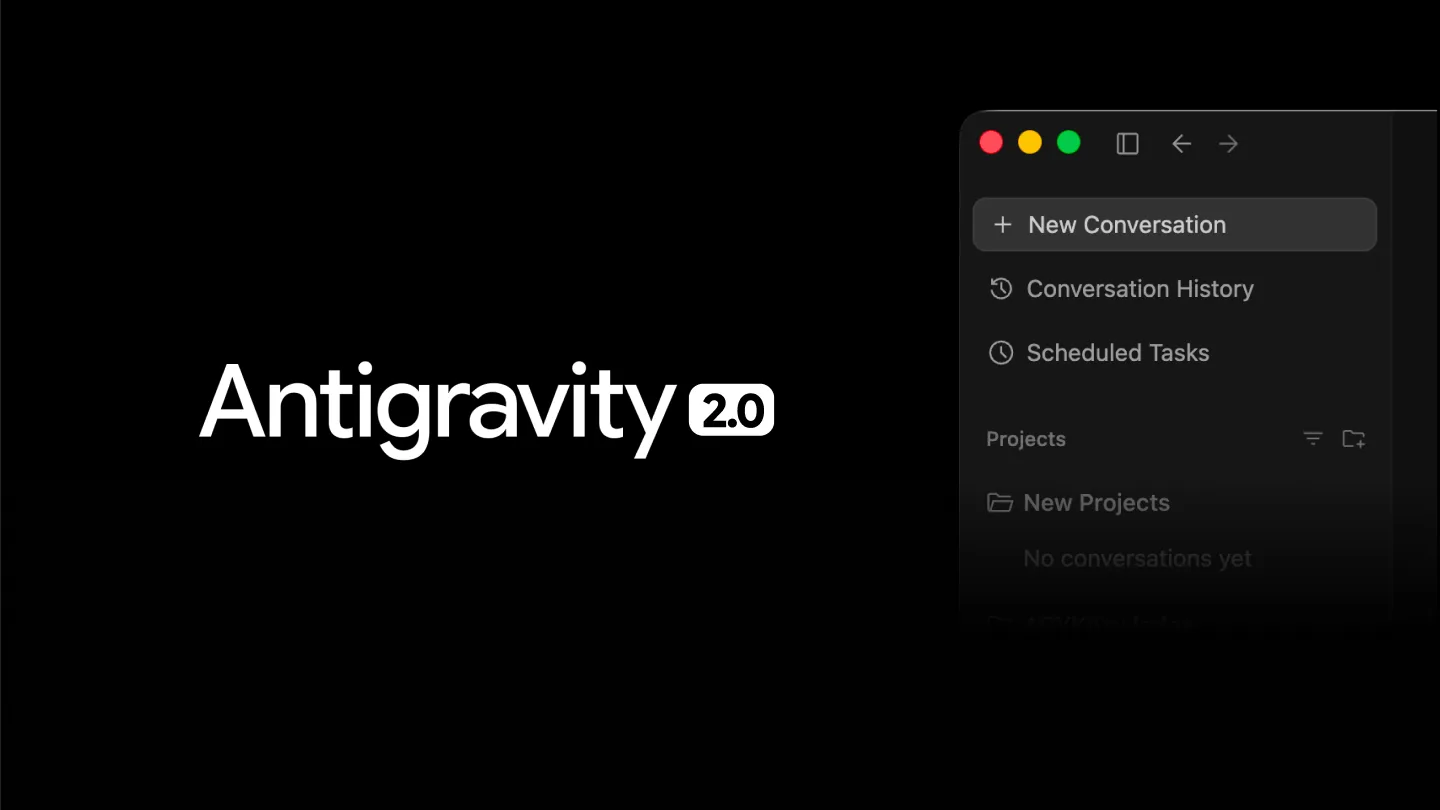
At I/O in May 2026, Google unveiled its coding platform Antigravity 2.0, launched Gemini 3.5 Flash, and said 3.5 Pro would follow the next month, but 3.5 Pro did not ship on schedule.
According to an August 2026 Reuters report, Google delayed its next flagship Gemini by two months because internal tests showed it still trailed rivals in areas such as coding. The same report said Brin urged staff to move faster at an all-hands meeting in April, and backed Kavukcuoglu. On August 5, 2026, Google announced a reshuffle: Kavukcuoglu became senior vice president at Google DeepMind, in charge of the Gemini models and the Gemini app.
On September 30, 2026, Google announced Gemini 4 Argon, saying it scored 77.9% on the coding benchmark DeepSWE v1.1, the highest in the industry. That is a number Google published itself. As of October 2026, it is open only to a small number of cyber-defense organizations and is not on the public API list.
What’s still unclear
- The memo’s full text: the original report is paywalled, and most circulating quotes are second-hand.
- “Engineers allowed to use Claude”: one outlet reported that some DeepMind engineers were allowed to use Claude for work just before I/O. This has only a single source.
- The exact gap: benchmarks differ in method and timing, so don’t fixate on any one percentage.
Penchan’s summary
Google has the widest distribution, its own chips, and DeepMind’s research depth. Brin still sounded the alarm, because coding matters too much: when AI writes much of engineers’ code, whoever’s model codes better can improve its next model faster.
This is a self-accelerating race. Admitting it’s behind and mobilizing right away shows the company is still clear-headed. Further reading: Who runs Google’s AI, Why Google invests in its rival Anthropic.