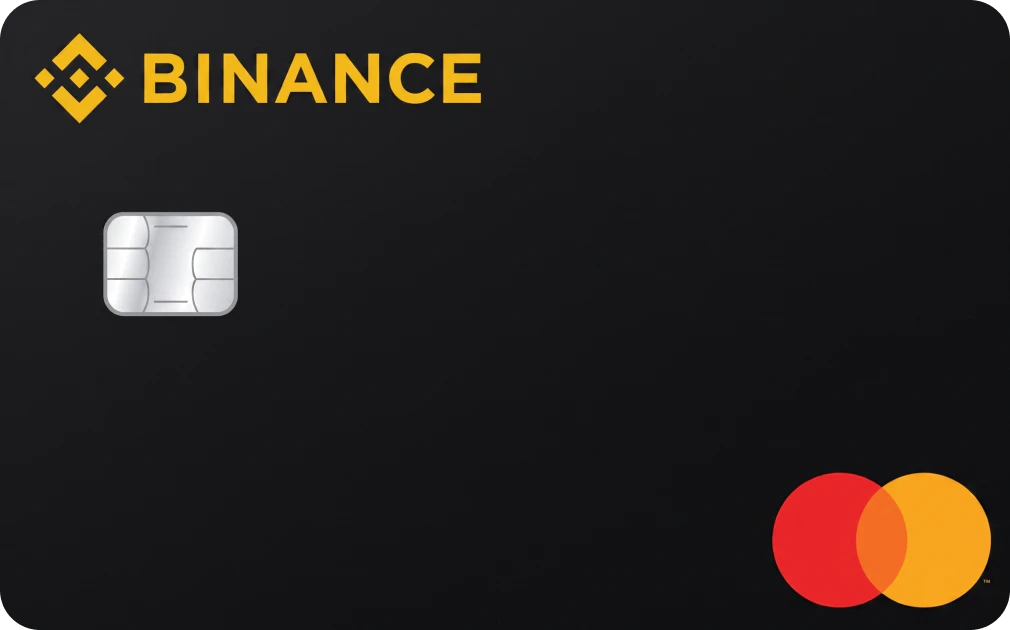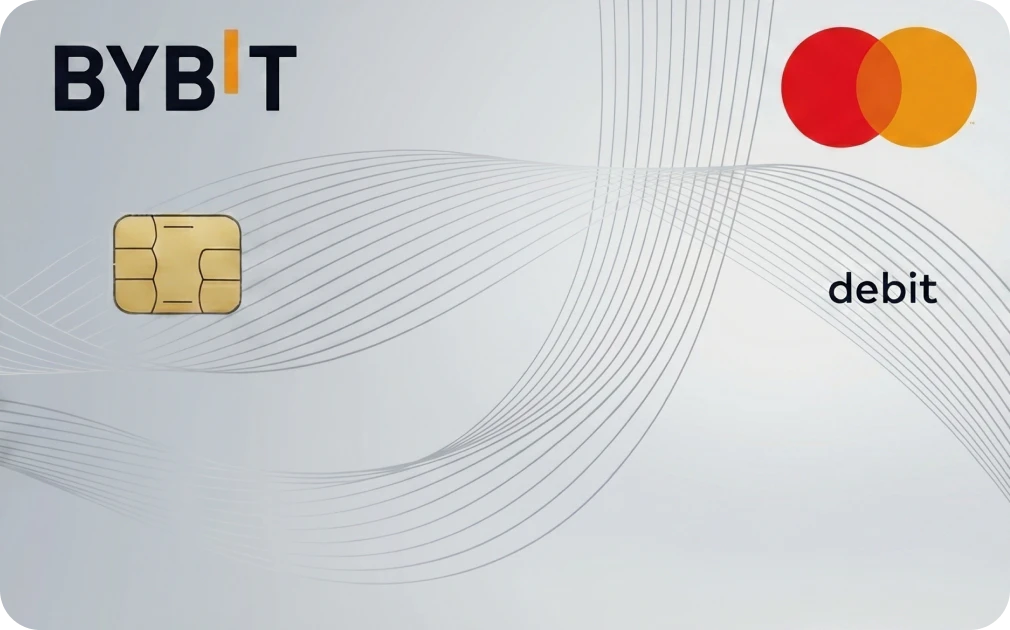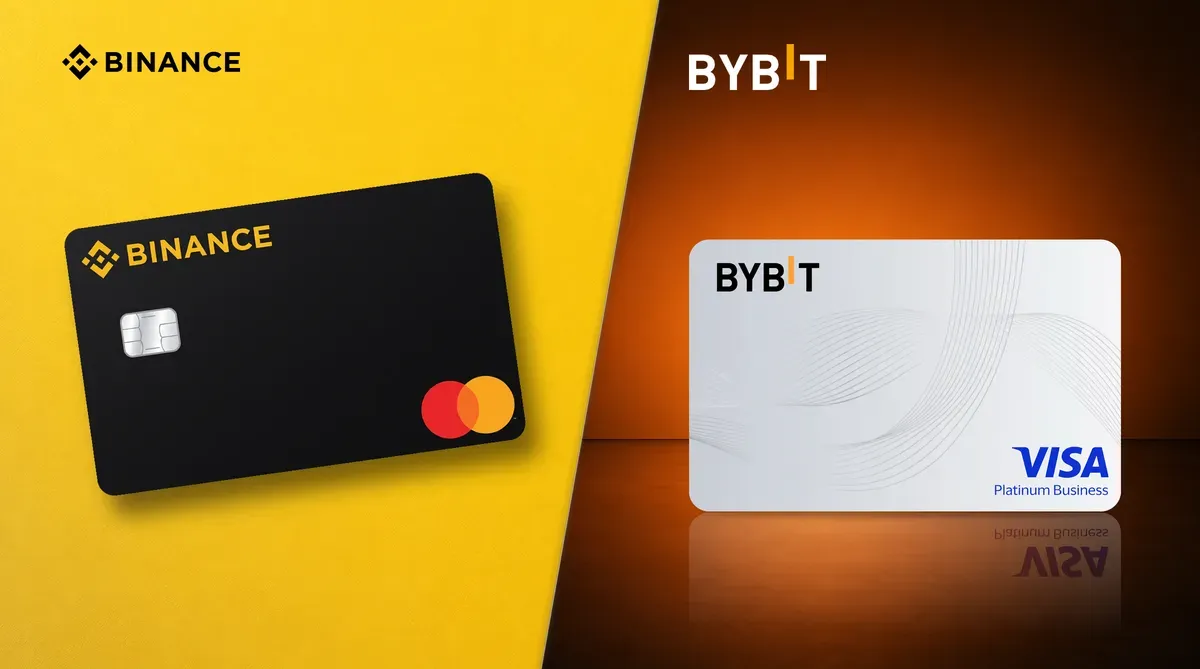
Both Binance Card and Bybit Card are available to applicants in Taiwan, and both let you spend crypto held in your exchange account. For most people in Taiwan, Binance Card is the first one to consider: cashback starts at 1.5%, with no VIP tier required. The main difference is how rewards work: Binance Card assigns one of three tiers based on monthly spending, while Bybit Card has six tiers based on VIP status or monthly spending, with up to 10% cashback and a monthly cap at every tier. Fees and risks are covered in What to know before applying.
How do Binance Card and Bybit Card compare?
| Item | Binance Card | Bybit Card |
|---|---|---|
| Available in Taiwan | Yes, with a Binance account that has passed identity verification | Yes, with identity and residential address verification |
| Card network | Mastercard | Visa |
| Virtual / physical card | Virtual card | Both; to get a physical card, first open a virtual card, verify your address, and reach spending limit Level 2; rollout is phased |
| Issuance fee | USD 0 | Virtual card currently free; physical card 5 USDT (waived for VIPs) |
| Annual fee | USD 0 | None |
| Fee on TWD purchases | 2% foreign exchange fee plus conversion fee (0.1% for USDC, 0.9% for other assets), plus a Mastercard fee | Crypto payment: 2% foreign exchange fee plus 0.9% conversion fee, 2.9% total; USD fiat balance payment: 2%, with no cashback |
| Base cashback | 1.5% (monthly spend under USD 100) | 2% (Base tier, monthly cap USD 5) |
| Maximum cashback and requirement | 3% (monthly spend of at least USD 1,000) | 10% (Infinite tier: Supreme VIP / PRO 3–5 or monthly spend of USD 25,000) |
| Cashback cap | USD 100 equivalent per month at the 3% tier | USD 5–600 per month, depending on tier |
| Apple Pay / Google Pay | New Apple Pay bindings paused; Google Pay supported | Apple Pay not officially supported; Google Pay supported |
| LINE Pay / JKOPay | Penchan confirmed LINE Pay works; JKOPay does not | LINE Pay —; JKOPay does not |
| Custody | Custodial; funds remain in your Binance account | Custodial; funds remain in your Bybit account |
| Sign-up referral code | PENCHANCO | PENCHAN |
- The reward systems differ: Binance Card uses cumulative spending for the month, resets at the start of each month, and requires no paid membership or staking. Bybit Card uses VIP tier or monthly spend; meeting either one is enough.
- Bybit Card only earns cashback when you pay with cryptocurrency; fiat-balance payments do not qualify. Binance Card cashback is paid in USDC or BTC equivalent depending on the account’s registration country.
- Bybit Card offers 100% cashback on selected subscriptions, including ChatGPT Plus, Claude Pro, Netflix, and Spotify. Base tier is excluded; at Beta tier, only VIPs qualify. General eligibility starts at Alpha for VIPs or monthly spend of at least USD 3,500. Payment must be made with crypto on the merchant’s website, and the cashback counts toward that tier’s monthly cap.
- Cost of a TWD purchase: Binance Card charges a 2% foreign exchange fee plus conversion (0.1% for USDC, 0.9% for other assets) and a Mastercard fee. Bybit Card totals 2.9% for crypto payments; USD fiat-balance payments cost 2% but earn no cashback.
- Mobile wallets: neither card can be newly added to Apple Pay, and both support Google Pay. Only Binance Card is confirmed to work with LINE Pay.
Who is Binance Card suited to?
- People with variable monthly spending who want 1.5% cashback from their first purchase without reaching a VIP tier first.
- People who want to pay with LINE Pay; it is the card Penchan has confirmed can be linked.
- People who usually pay with USDC, which has a 0.1% conversion fee.
- Existing Binance users who want spending deducted directly from their Spot or Funding Account.
Who is Bybit Card suited to?
- Bybit users with a high enough VIP tier or enough monthly spend to qualify for 4%–10% cashback.
- People with VIP status or monthly spending of at least USD 3,500 who regularly pay for subscriptions such as ChatGPT Plus, Claude Pro, Netflix, and Spotify with crypto on the merchants’ websites.
- People who need a physical card, are willing to open a virtual card first, verify a residential address, reach spending limit Level 2, and accept phased rollout and a waitlist.
- Existing Bybit users who want to keep their funds on one exchange.
What to know before applying
- Both companies have been named for not completing anti-money-laundering registration: the warning list of the Taiwan (ROC) Virtual Currency Business Association named Binance on August 10, 2026; Taiwan’s Securities and Futures Bureau announced on June 11, 2026 that Bybit may not provide virtual-asset services in Taiwan or solicit Taiwanese people through advertising.
- Both cards are custodial, with funds held in exchange accounts. Bybit suffered an ETH cold-wallet hack in February 2025; the company said customer funds were unaffected.
- Bybit Card has a monthly cap at every reward tier. Binance Card’s 3% tier is capped at USD 100 equivalent per month, and cashback already paid is clawed back if a purchase is refunded.
How to apply
For the full steps and where to enter a referral code, see the Binance Card application guide and the Bybit Card application guide. For fees and more terms, see Binance Card review and comparison and Bybit review and comparison, or compare them with other cards in the crypto card comparison.