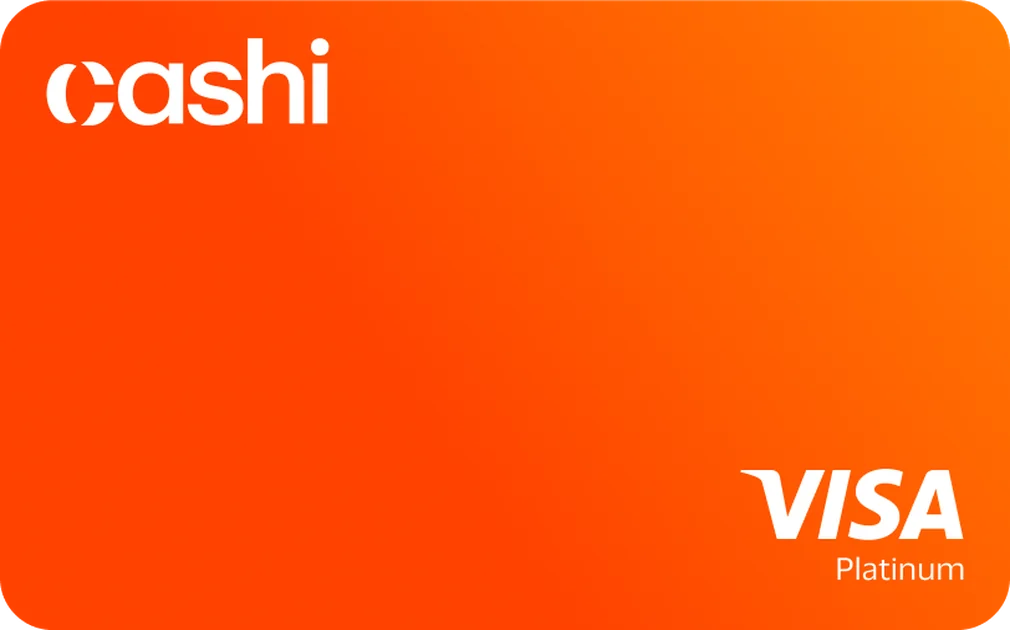
Cashi is a stablecoin spending app paired with a USD virtual Visa debit card. Rewards focus on subscriptions, selected online shopping, and travel; everyday in-store card purchases earn no rewards. To compare it with other cards, see the crypto card comparison. Fees and risks are covered below in What to know before applying.
What is Cashi? Company background
Cashi is operated by Cashi Ltd., incorporated in Hong Kong. It is unrelated to the Walmart app of the same name in Mexico. Cashi describes itself as a fintech company, not a bank; licensed third parties issue and manage its financial products.
The founder and CEO is Esther Wong. Her company bio says she has 15 years of experience in cryptocurrency, cards, and digital finance.
Cashi launched its app and card in public beta on August 11, 2026. The full launch is expected before the end of the year.
Cashi rewards: the 3-2-1 rules
Cashi has no membership tiers. All cardholders get the same “3-2-1 Cashi” rewards automatically, with no staking or upgrade required.
| Item | 3-2-1 Cashi (all cardholders) |
|---|---|
| 3% on subscriptions | Amazon Prime, Google One, Canva, and Uber One; monthly plans only, one transaction per merchant per month |
| 2% at selected online stores | 28 selected stores, with a monthly reward cap of USD 10 per store |
| 2% on other online shopping | Officially approved merchant categories, with a combined monthly reward cap of USD 10 |
| 1% on travel | Airlines, hotels, and Booking.com, Agoda, Expedia, and Trip.com; hotel category 7011 transactions under USD 20 do not qualify; only the first USD 2,000 of each transaction counts, with a combined monthly reward cap of USD 20 |
| Other purchases | 0% |
| Reward format | USD spending credit |
| Fees | USD 5 activation fee (returned as spending credit); no annual or monthly fee |
The 3% subscription reward applies only to monthly plans billed directly by the merchant or through Google Play. Apple App Store billing, annual plans, one-time purchases, and gift cards do not qualify. The 2% rewards for selected and other online shopping apply only to online purchases, not in-person card payments. In-store card and contactless payments earn no rewards, except for travel. Selected stores include Amazon, AliExpress, Shein, Temu, Nike, Zara, iHerb, and Sephora.
Rewards must be claimed manually from the Rewards page. They are issued as spending credit, can only offset later card purchases, cannot be withdrawn or transferred, and do not expire. Refunds also reverse the corresponding reward.
Cash withdrawals, transfers, P2P, gambling, cryptocurrency purchases and sales, gift cards, insurance, car rentals, taxis, fuel, and public transit do not earn rewards.
For a full comparison, see Cashi review and comparison.
Cashi fees
- Activation: Cashi says activation costs USD 5 and the USD 5 is immediately returned as spending credit. Your cash balance must contain USD 5 before activation.
- Annual and monthly fees: None. There is also no inactivity fee.
- Foreign currency: Purchases in non-USD currencies incur a 1% conversion fee; USD purchases incur 0%.
- Deposits: Cashi charges no fee for cryptocurrency deposits; you pay only the blockchain network fee. Fiat deposits have a fee, and there are no TWD or HKD deposit methods.
- ATM: The virtual card cannot be used at ATMs.
- Disputes: USD 50 per dispute, not refunded even if you win. Asking the merchant for a refund first is free.
- Wrong network or unsupported coin: USD 10 is charged only if the funds are successfully recovered.
See Cashi fees in detail.
What to know before applying
- Cashi is a custodial service: Cashi holds the assets, which are not covered by any government deposit protection. Its terms say you may not recover all your assets if Cashi becomes insolvent or ceases operations.
- The product is in public beta. The terms were updated again on October 14, 2026. Cashi can change the program at any time.
- If Cashi freezes your card, refunds must wait until its review is complete, and you cannot unfreeze it yourself.
How to apply for Cashi (entering a referral code)
- Download the Cashi app (available on iOS and Android) and sign up through the referral link. If the code is not applied automatically, enter the referrer’s username
4897during registration or under Profile → Referral. The code must be linked before you receive the card; it cannot be added later or changed after confirmation. - Be at least 18, or the higher legal age in your location, and complete SMS, ID, and selfie verification. Available ID types depend on the region; proof of address from the last 3 months may also be requested. Most reviews take a few minutes, and the maximum is 24 hours.
- Deposit at least USD 5 in cryptocurrency. Supported assets are USDT (Ethereum, Arbitrum, BNB Chain, Solana, Tron), USDC (Ethereum, Arbitrum, Base, BNB Chain, Polygon, Solana), BTC, ETH, and SOL. Check the network and address before transferring. See the blockchain transfer SOP.
- Tap “Activate card for $5” to activate the card. The USD 5 is immediately returned as spending credit.
- Add the card to Google Pay on Android. On iPhone, use the card number for online payments for now.
The official referral reward is USD 5 in spending credit for the referrer after the invited person spends USD 50 with the card.
Using Cashi in Taiwan and Hong Kong
Cashi is confirmed available in five regions: Taiwan, Hong Kong, Japan, South Korea, and Thailand. Check whether your country is included.
- Taiwan: There is no TWD fiat deposit method; you can transfer in USDT or USDC from an exchange or wallet. TWD purchases incur a 1% conversion fee. JKoPay cannot be linked because it accepts only credit cards issued by domestic partner banks.
- Hong Kong: There is no HKD fiat deposit method. HKD purchases also incur a 1% conversion fee.
- Google Pay: Available on Android.
- Apple Pay: Not currently available; Cashi says it is coming soon. For now, iPhone users can pay online with the card number.
- Physical card: Not currently available; Cashi says it is planned for the future.
- Claude: Payments are not accepted. The CEO said the card is issued from Hong Kong, which Anthropic currently blocks.