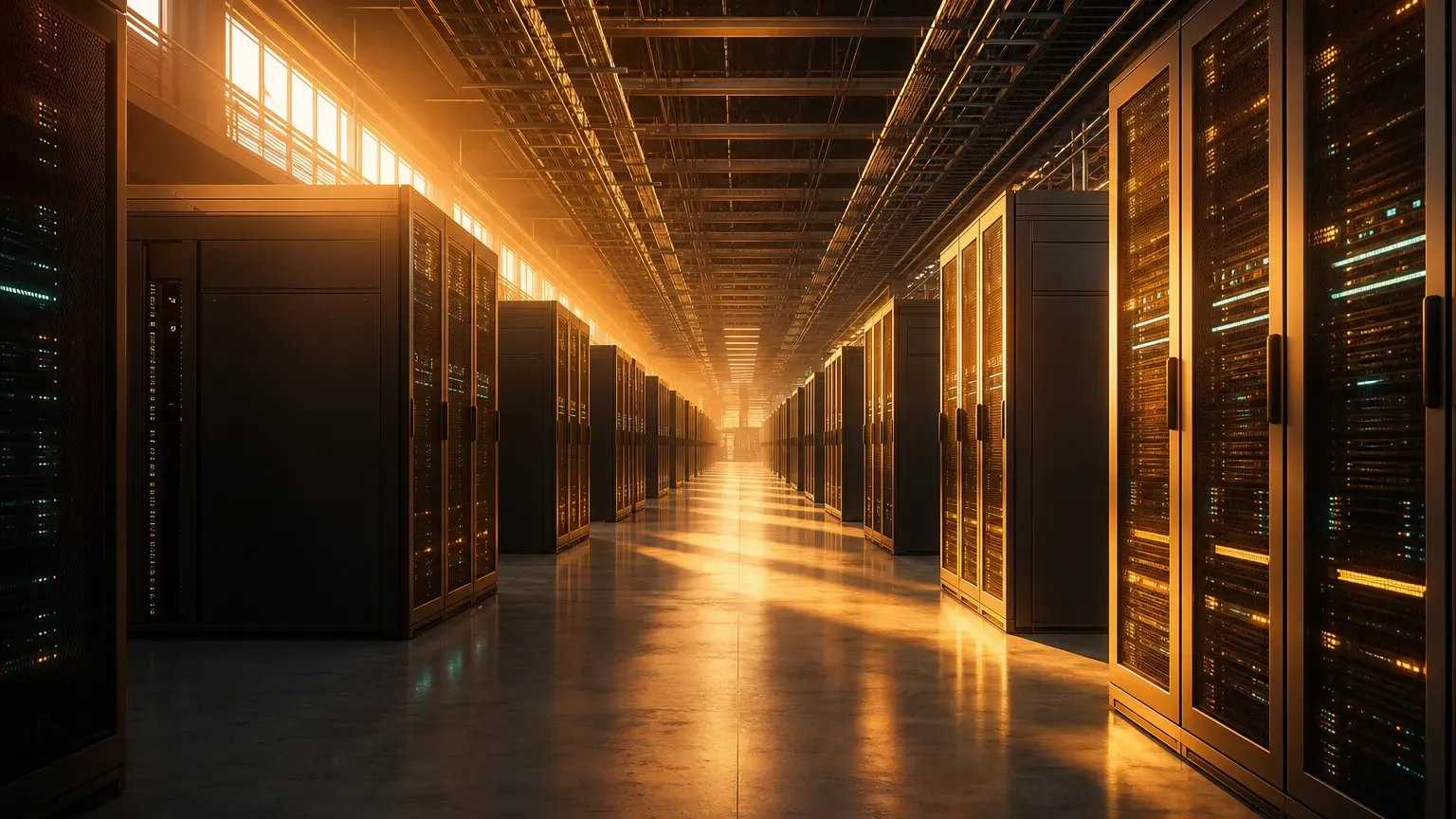
However smart an AI model is, it burns huge amounts of computing power behind the scenes. For OpenAI, compute decides how fast it can run and how big it can grow. To get to know the company first, start with What is OpenAI?.
Remember the main thread in one line: OpenAI is moving from “Microsoft only” to “leading the Stargate joint build-out, plus multiple clouds and partners.”
Stargate: big promises, little running so far
Stargate is the flagship of OpenAI’s compute strategy, but most of its capacity is still a construction site.
Announced in early 2025, it is a joint venture funded by OpenAI, SoftBank, Oracle, and the Middle Eastern sovereign fund MGX. OpenAI runs operations, SoftBank handles finance, and Oracle is the main compute and systems partner. Different developers build each site. The official goal is to invest about US$500 billion in the United States over several years and build 10 GW of data center compute.
Seven US sites are planned (status based on Epoch AI’s April 2026 satellite-image estimates):
| Site | Status |
|---|---|
| Abilene, Texas (flagship) | Partly operating |
| Milam County and Shackelford County, Texas | Under construction |
| Doña Ana County, New Mexico | Under construction |
| Lordstown, Ohio | Site cleared; large data center construction unclear |
| Port Washington, Wisconsin | Under construction |
| Saline Township, Michigan | Under construction |
Epoch AI estimated in April 2026 that about 0.3 GW was running at Abilene. OpenAI has not published real-time capacity. Epoch expects the seven sites to total more than 9 GW of planned capacity, each on its own timeline.
Outside the US, expansion runs through OpenAI for Countries: the UAE has a formal project, and Argentina has signed a letter of intent. According to CNBC, Stargate UK was paused in April 2026 over concerns about power prices and regulation. As of October 2026, there was no news of it resuming.
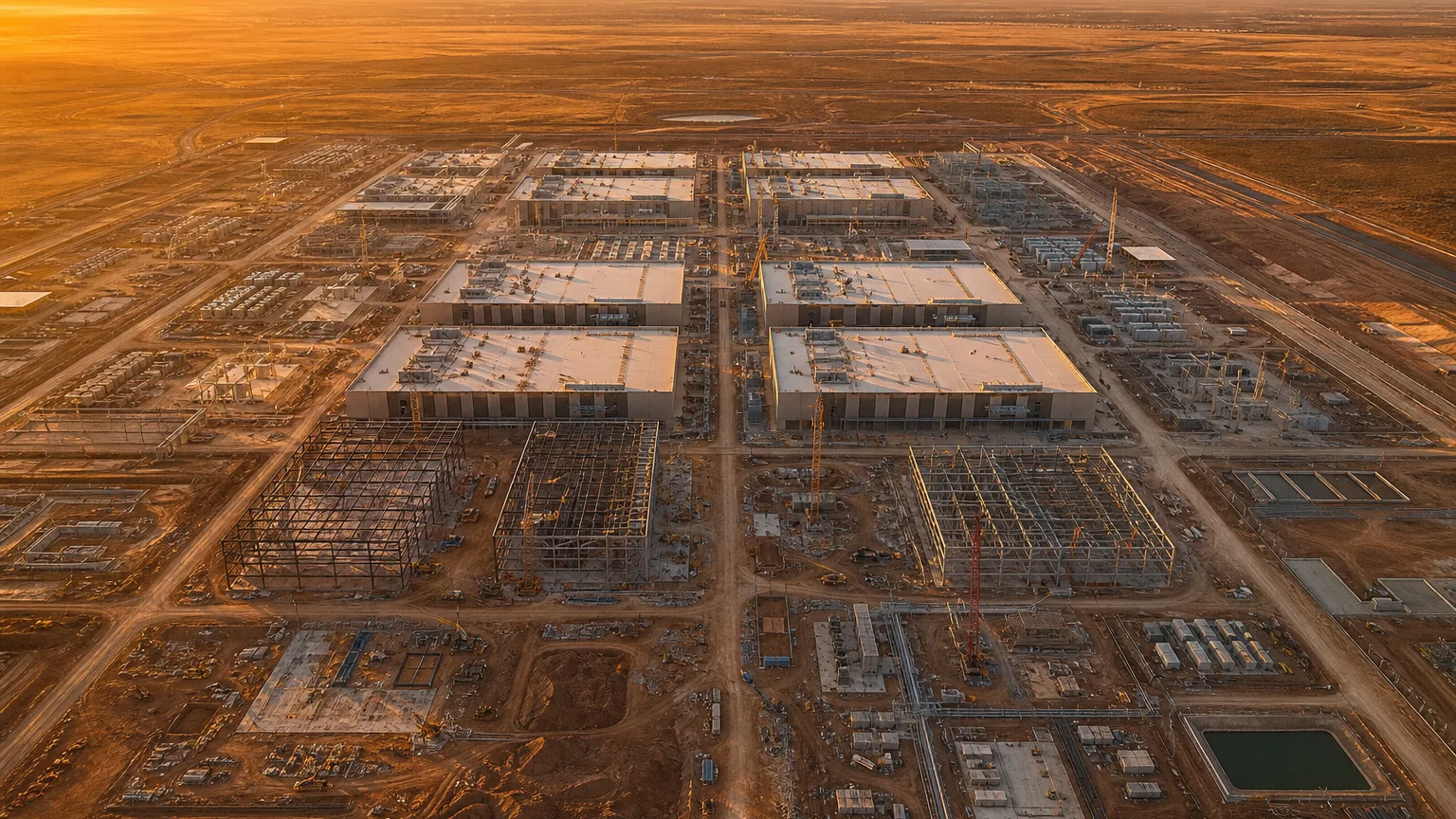
An aerial illustration of a large AI data center campus. The buildings and nearby construction sites give the “compute arms race” a concrete shape.
The revised Microsoft deal: from exclusive to multi-cloud
Microsoft is no longer OpenAI’s only cloud, but it is still the most important one.
The two companies revised their deal in April 2026. OpenAI can serve customers on other clouds, and its products generally launch first on Azure (unless Microsoft cannot or chooses not to support them). Microsoft’s IP license runs through 2032 and is now non-exclusive. The revenue-sharing terms were also rewritten.
Other players in the compute network
- Amazon (AWS): Invests in OpenAI and signed a multiyear cloud deal.
- Oracle: Delivers Nvidia GB200 racks at the flagship Abilene site.
- Nvidia: The main GPU supplier, and also an OpenAI investor.
- SoftBank: The main funder of Stargate, and also an OpenAI investor. After completing a US$30 billion follow-on investment in October 2026, it has invested US$64.6 billion in total and owns about 13% (SoftBank’s official announcement).
- Broadcom: Builds custom chips together with OpenAI.
Custom chips: taking back control
Beyond multi-cloud, OpenAI is also moving further upstream. It is working with Broadcom to deploy 10 GW of custom accelerators. The official plan starts in the second half of 2026 and finishes by the end of 2029. The first inference chip is called Jalapeño. According to The Wall Street Journal in October 2026, Broadcom is seeking more than US$50 billion in financing for this chip program, and talks are still at an early stage.
The motive is simple: OpenAI’s compute has long been tied to Nvidia, which is expensive and in short supply. If its own chips succeed, OpenAI gets more control back. But this path also costs a lot and carries uncertainty. For the products, see What products does OpenAI make?; for the supply chain, see The AI hardware supply chain.
The risks of this big bet
Leading Stargate gives OpenAI control, but it also brings heavy financial pressure. Someone has to fund commitments worth hundreds of billions of dollars, data centers need power and land, and the chips need their own financing.
Compared with simply renting existing cloud capacity, this multi-party build-out model needs bigger capital commitments and carries more execution risk.
Penchan’s summary
OpenAI’s compute story is about not depending on any one partner: from being tied to Microsoft, to leading the Stargate joint build-out, spreading across multiple clouds, and building its own chips.
When you read its compute news, first separate what is “already running” from what is only “announced.” The gap between the two is the real risk in this bet.