
This article is only a personal trading study note and does not constitute investment advice. Trading involves risk. Make independent judgments and take responsibility for your own decisions.
Market Structure changes: continuation and break.
Preface
In the previous “Issue 11,” we talked about how to judge trends. This time, we go deeper into how to mark changes in Market Structure.
When Market Structure changes, it can be divided into continuation and break. These represent trend continuation and trend break. Converging patterns are not included here. In English, we use COS/BOS and CHoCH to represent them. Another school also uses MSB to represent structure break.
One point deserves attention: in English, “break” can mean both breakout and damage. So when BOS and MSB are translated into Chinese, the terms can easily create bias. This article marks their actual forms clearly for reference, but you do not need to overthink the literal meaning. Breakout, break, damage… after enough study and chart review, you will find that understanding the meaning is what matters. The label itself is not the sword.
Structure Change: Continuation
Structure continuation is best represented by COS, Continuation of Structure. It means that in an uptrend, price breaks the prior high and continues the uptrend.
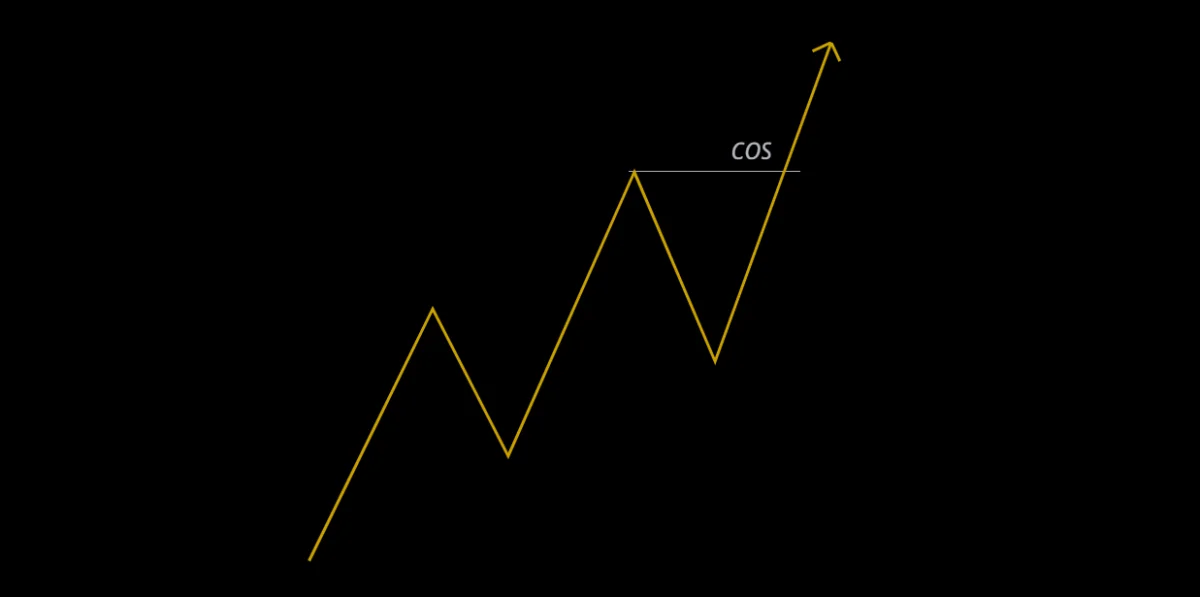
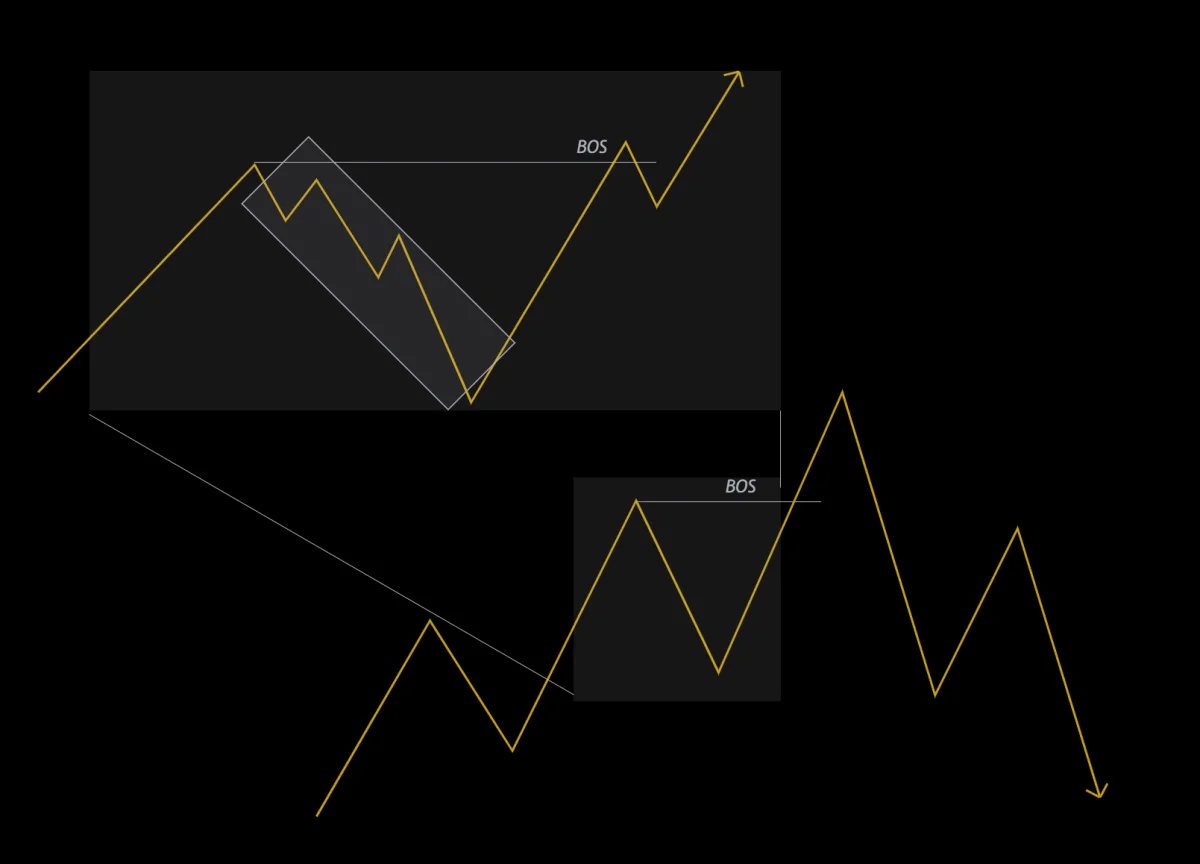
Anyone who watches SMC or order flow will probably see BOS, Break of Structure, more often. You may wonder: in a continuing structure, what exactly is being broken?
My interpretation is that this involves primary and secondary structure. In HTF, higher timeframe, it may be trend continuation, but in LTF, lower timeframe, it is a reversal structure. So some people include this idea inside “break,” meaning breakout or damage, and call it BOS. For this part, just remember that the BOS most people draw represents trend continuation, the same as COS.
Structure Change: Break
When an uptrend structure has just been broken, we can mark CHoCH, Change of Character, as a potential reversal. This break also means the market may change direction and begin leaning bearish.
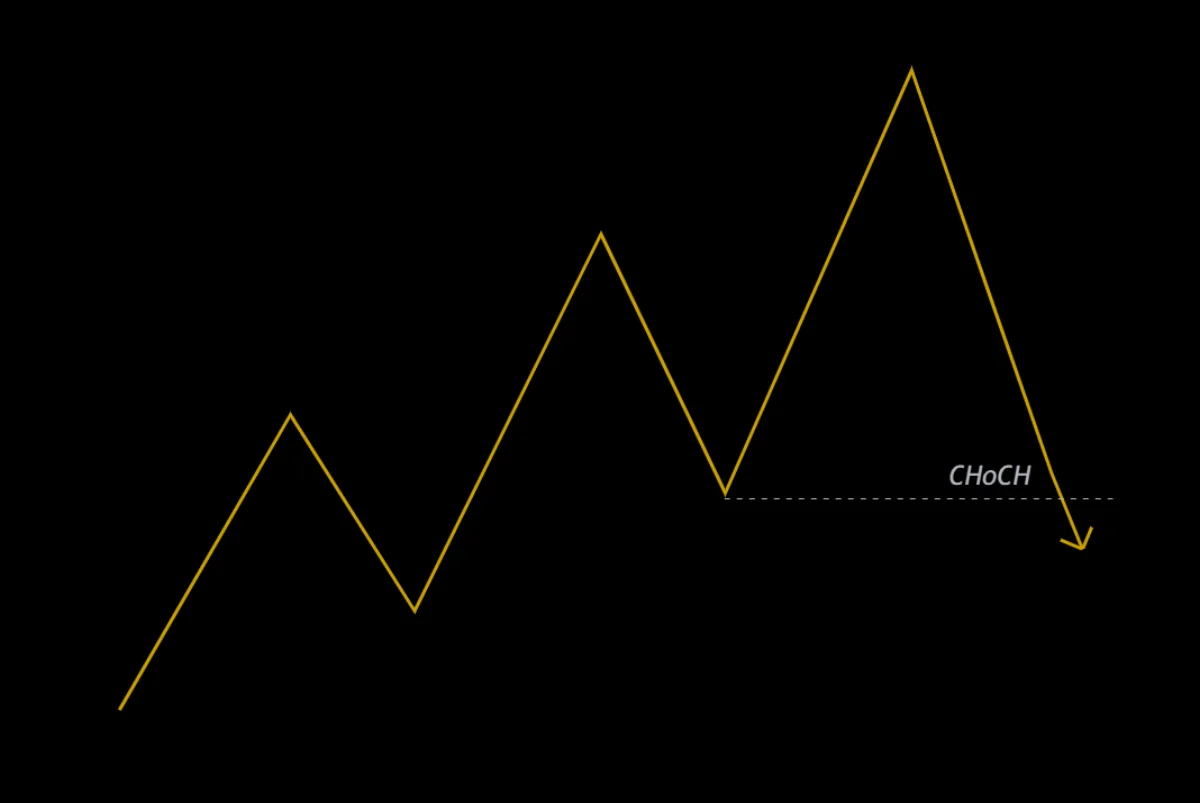
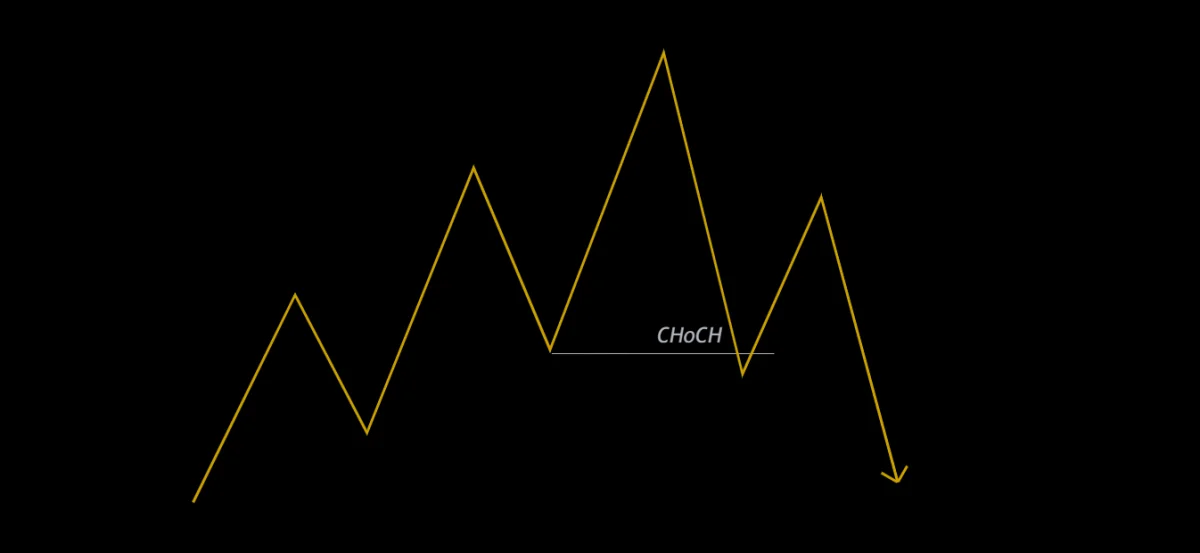
Why is it only a potential reversal? Because at the moment of the break, we still do not know whether the next high will be lower than the previous high, so it cannot be confirmed yet. When the later high fails to make a new high and the low is broken, the reversal structure can be confirmed, and the trend has changed.
What Is MSB in Market Structure?
The marking I personally use more often is MSB, Market Structure Break. Based on my observation of RektProof’s content, both COS and CHoCH can be marked as MSB.
But here I also want to add one concept. Generally speaking, for a break to be valid, it needs a trend reversal, meaning large capital has entered and changed the original direction. At that point, we can more reasonably judge a structural break and potential reversal, then combine it with concepts such as OB and FVG. So if you prefer, it is fine to separate the labels clearly.

Summary
Based on current observation:
{ COS = BOS, CHoCH } = MSB
Continuation and break affect how we read the current trend and structure. From reading swing high/low, HH/HL, LH/LL, all the way to COS/BOS and CHoCH, these are important fundamentals. Practice this through chart review.
After this, primary/secondary structure, multi-timeframe handling, Momentum reading, and other material still need to be included to judge the validity of structural changes. We will talk about those later.