“HBM shortage” and “HBM concept stocks” have been regulars on the financial pages for the past few years. But who actually makes this memory chip? And what do Taiwan’s many “HBM concept stocks” do?
This piece first covers who makes HBM itself and where Taiwan stands, then breaks down the roles Taiwan’s firms play in packaging, test, and other steps. It’s the concept-stock follow-up to the HBM gate.
The Bottom Line: Taiwan Doesn’t Make HBM Itself
HBM (high-bandwidth memory) itself is made by just three companies: Korea’s SK hynix and Samsung, and America’s Micron. None is a homegrown Taiwanese company. Micron makes DRAM in Taiwan and is expanding HBM-related capacity there, but Micron is a U.S. company, not a Taiwan-listed homegrown firm.
So most “HBM concept stocks” play supporting roles: the packaging that binds the GPU and HBM together, chip test, substrates, and equipment.
Core-Data Snapshot
| Topic | Data | Timing / source |
|---|---|---|
| HBM revenue share | SK hynix 50%, Samsung 33%, Micron 18% | Q2 2026, Counterpoint estimate |
| HBM4 | All three in volume production and qualified for NVIDIA Vera Rubin | June 2026, Jensen Huang (Korean media reports) |
| Next-gen HBM4E | Sampling now, volume production targeted for 2027 | SK hynix official; TrendForce expects ramp in 2H 2027 |
| Supply and demand | Still short of demand in 2027; Micron has signed customer agreements for most of its 2027 HBM supply | TrendForce forecast; Micron official (September 2026) |
| Taiwan’s role | Packaging, test, probe cards, substrates, equipment (not HBM itself) | Industry division of labor |
The HBM Big Three: SK hynix, Samsung, Micron
SK hynix leads in revenue share. It began volume shipments of HBM4 in Q2 2026 and is ramping output fully in the second half. Samsung is catching up fastest: its revenue share rose from 21% in Q1 2026 to 33% in Q2, putting it in second place. Micron is third and has said publicly that its HBM4 is in volume production for NVIDIA’s Vera Rubin platform.
With all three qualified for Rubin, the race is now about who gets a bigger allocation and who has better yields. That directly drives HBM supply and prices.
How HBM Is Made: Where Taiwan Plugs In
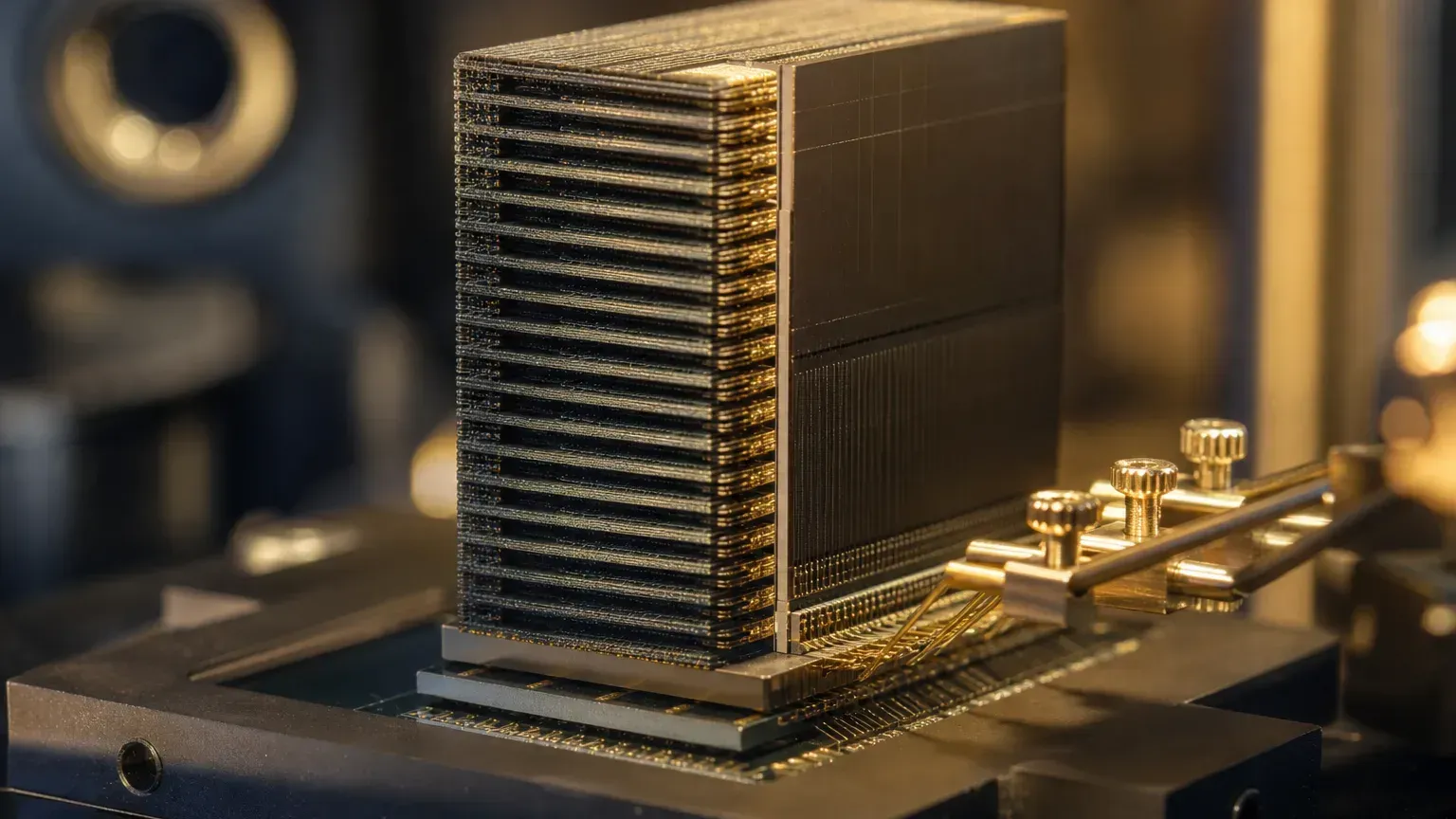
HBM stacks several bare DRAM dies vertically, links the layers with through-silicon vias (TSV, vertical conductive holes drilled through the chip), and then seals the whole stack. At the bottom is a “base die” that talks to the GPU. According to media reports, SK hynix has TSMC make the HBM4 base die on a 12nm-class process, while Samsung and Micron make their own. Finally, the finished HBM goes through advanced packaging such as TSMC’s CoWoS, which places it on the same substrate as the GPU.
Taiwan mainly plugs into that last integration step: advanced packaging and test. The DRAM stacking itself belongs to the big three.
Taiwan’s Role in the HBM Supply Chain
The list below groups firms by role and only describes the division of labor. Which memory maker or project each one actually serves is mostly analyst guesswork. A name on the list doesn’t mean an order or a benefit.
- Advanced-packaging integration: TSMC’s CoWoS binds the GPU and HBM into one module, and TSMC also works with SK hynix on the HBM4 base die. ASE’s VIPack and similar platforms can also do high-density integration of ASICs and HBM.
- Packaging and test: Powertech does memory and logic packaging and test; KYEC focuses on test.
- Probe cards and test interfaces: MPI, WinWay, and Chunghwa Precision. These are key consumables for high-speed, high-pin-count testing.
- Substrates: Unimicron, Kinsus, and Nan Ya PCB.
- Equipment and inspection: Grand Process, All Ring Tech, Scientech, and Gallant Micro Machining are often grouped into the advanced-packaging equipment chain.
- Design services / silicon IP: GUC provides HBM controllers, interface silicon IP, and CoWoS integration design services.
How to Read “HBM Concept Stocks”
Taiwan’s firms mostly sit around HBM and are on a different scale and footing from the big three, so don’t lump them together. Whether these companies win HBM orders, and how much, is mostly not disclosed. This article only describes industry roles and the supply-chain division of labor. It doesn’t list beneficiary stocks, doesn’t rank individual stocks, and is not investment advice.
Penchan’s summary
HBM itself is in the hands of the Korean and American big three. Taiwan’s place is in the bottleneck steps before and after it. When you look at “HBM concept stocks,” first work out where each company sits in the supply chain and what it does. Treat it as an industry map, not a stock-picking list.
To see the packaging that binds the GPU and HBM together, read CoWoS and advanced packaging. For all eight gates of the chain, go back to the supply-chain overview.