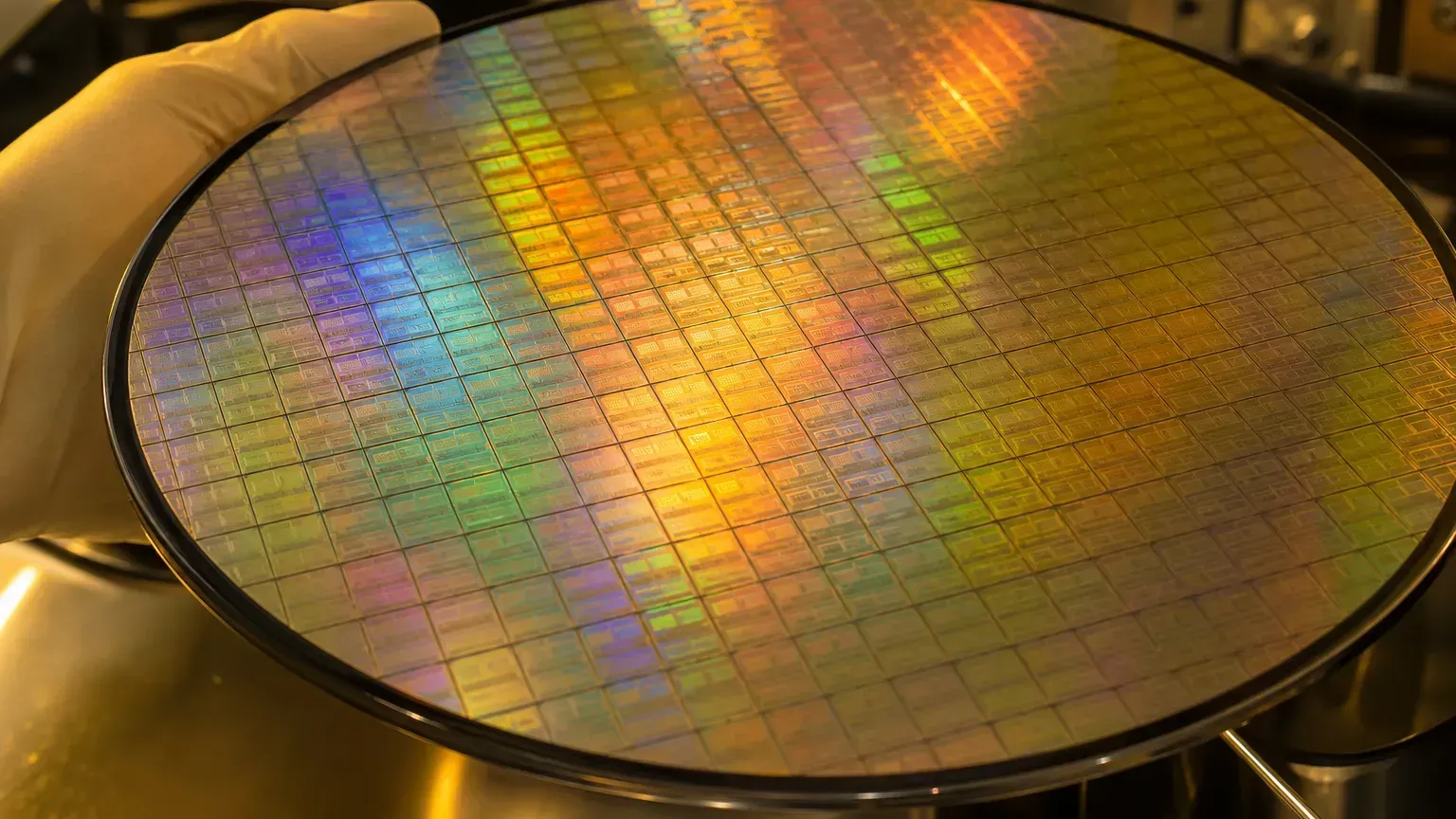
NVIDIA designs the world’s most sought-after AI chips, yet it doesn’t own a single fab. Apple and Qualcomm are the same: they only draw the designs and don’t make the chips themselves. Most of these chips come from one company: TSMC.
This is the beginner’s edition of Gate 4, “Foundry,” in The AI Hardware Supply Chain, End to End: what a foundry is, why the model works, who does it, and why almost all of the most advanced AI chips are made in Taiwan.
What Is a Foundry?
A foundry is a business that “makes chips for other companies.”
Many companies only design chips and don’t build their own factories. They are called fabless companies (fabless semiconductor companies), and NVIDIA, Apple, and Qualcomm are all examples. They hand their designs to a foundry for production. TSMC uses the pure-play model and sells no chips under its own brand.
An analogy: a fabless company is like a famous chef who designs the menu. TSMC is like a central kitchen that cooks each chef’s recipes and never opens its own restaurant to compete.
Core-Data Snapshot
Market shares are research-firm estimates.
| Topic | Data | Timing / Source |
|---|---|---|
| TSMC global foundry market share | 72.5% (by revenue) | TrendForce, Q2 2026 |
| Ranks two through five | Samsung 5.9%, SMIC 5.4%, UMC 3.9%, GlobalFoundries 3.2% | Same as above |
| TSMC leading-edge share | 7nm and below make up 77% of its wafer revenue | TSMC official, Q2 2026 |
| TSMC 2026 capex | $60–64 billion | TSMC official, raised in July 2026 |
| Taiwan’s share of the most advanced semiconductors | Estimated over 90% | CSIS, as of 2023 |
The Foundry Model: Splitting Design from Manufacturing
In the early days, most big chip companies were IDMs (integrated device manufacturers) that did design, manufacturing, and sales all in-house. Intel was the classic example. The problem: a leading-edge fab can easily cost tens of billions of dollars, and not every design company can afford one.
In 1987, TSMC created the “pure-play foundry” model: it only manufactures and sells no own-brand chips, so it never competes with its customers. That position lets NVIDIA and Apple hand over their most confidential designs. Design companies focus on innovation, the foundry focuses on pushing yield and capacity as far as possible, and the whole industry moves faster.
Who’s in the Foundry Business
TSMC is the leader and handles almost all leading-edge process production. Samsung is second, running a foundry alongside its own chip division. SMIC is around third, mostly on mature processes. UMC and GlobalFoundries focus on mature and specialty processes. Intel restarted its foundry business in recent years (Intel Foundry). In Q2 2026 its foundry revenue from outside customers was about $293 million, and it is still catching up.
Market shares change a lot depending on whether you count in-house chip divisions and whether you measure by revenue or capacity. The numbers here use research firms’ pure-play foundry revenue basis.
Leading-Edge vs. Mature Process
A process node (such as 5nm, 3nm, or 2nm) is roughly a technology generation. A smaller number usually means more transistors in the same area and lower power use, but it is also more expensive and harder to make. The industry usually calls 7nm and below leading-edge, and almost all high-end AI chips use this tier.
Mature processes at 28nm and above are in just as much demand: car chips, display drivers, and power management all rely on them. More advanced isn’t always better; it depends on the use. For 2nm and GAA, see the leading-edge process; for manufacturing equipment, see ASML and lithography equipment.
Why It’s Concentrated in Taiwan, and How It’s Spreading Out
The most advanced foundry work is heavily concentrated in Taiwan, for three reasons: the customers and technology TSMC built up through its pure-play model; new processes need R&D, equipment, materials, and talent close together, so TSMC starts volume production of its most advanced processes (such as 2nm) in Taiwan; and Taiwan already has a complete supply chain and clusters of fabs.
To spread risk and stay close to customers, TSMC is also building fabs abroad. Its planned total investment in Arizona is $265 billion (with another $100 billion added in July 2026). Fab 1 there already makes 4nm chips in volume, and later fabs are planned for 3nm, 2nm, and advanced packaging. In Kumamoto, Japan, fab 1 runs specialty processes and fab 2 is planned for 3nm with volume production in 2028. Dresden, Germany, targets car and industrial chips.
At the same time, TSMC is building 13 advanced-process and packaging fabs in Taiwan, so the core of cutting-edge production stays in Taiwan. This is the root of the geopolitical risk across the whole supply chain. For Taiwan’s full semiconductor division of labor, see Taiwan’s semiconductor supply chain.
Penchan’s summary
At its core, the foundry model splits the chip industry into design and manufacturing: fabless companies focus on design, foundries focus on manufacturing.
TSMC got started with a pure-play model that “never competes with its customers,” then used leading processes and an industry cluster to stay on top. The result: almost all of the world’s most advanced AI chips are made in Taiwan, which makes Taiwan the most critical, and most closely watched, link in the AI supply chain.